
Before You Buy a Kitchen Island: 9 Questions Every Homeowner Should Answer First
Updated: Jun 26
It is the most aspired-to feature in any kitchen renovation — and one of the most often regretted. Here is the question set that prevents that.
By: HomeFindss Home & Lifestyle

Credit: Bricks & Birches
A kitchen island rarely fails because the wrong one was chosen. It fails because the right questions were never asked — until the cabinetry was already on order.
Walk into almost any kitchen showroom, and the island is the centerpiece: marble waterfall edges, a row of pendant lights, and bar stools angled just so. It is, without much competition, the most photographed feature in modern kitchen design. It is also, by a wide margin, one of the renovation decisions homeowners most often say they would approach the second time differently.
The issue is rarely tested—how? It is sequencing. An island gets chosen for how it looks before anyone has worked out how it needs to behave—how people will move around it, what it needs to hold, how it will be lit, and what it will actually cost once every trade involved has been paid. The nine questions below are the ones a considered kitchen designer works through before a single cabinet is specified. Answer them in this order, and the island stops being a gamble.
Question 01
Does your kitchen actually have room for one?
A minimum of 1 meter of clearance is required on every working side—this is non-negotiable, not a guideline.
Increase to 1.2 meters on the side facing the hob or oven for safety while cooking.
Measure with tape directly on the floor before you look at a single island design.
An island squeezed into a tight kitchen becomes a bottleneck, not a feature.
If you cannot walk around it freely, it is furniture, not a kitchen.

Credit: Ashley Montgomery Design. This layout works because the wide, open-plan circulation allows for a seamless flow between the prep-heavy marble range area and the casual seating side, ensuring that even when the space is populated, it never feels hemmed in. If you can maintain at least 42 to 48 inches of clearance on all sides, an island will not just fit; it will fundamentally transform the room from a workspace into a social stage. Here, the island doesn’t just take up room—it commands the atmosphere, creating a rhythmic, functional loop that makes the entire kitchen feel larger, rather than more confined.
Question 02
What do you actually need it to do?
Prep surface only — no plumbing or power required, the simplest and most affordable install.
Seating — requires an overhang of at least 30 cm, ideally 38 cm, to seat comfortably.
Storage — decide between drawers, doors, and open shelving before the design is finalized.
Sink or hob — requires coordination with trades for drainage and extraction, and adds significantly to cost and complexity.
Function determines form. Decide this first, never last.
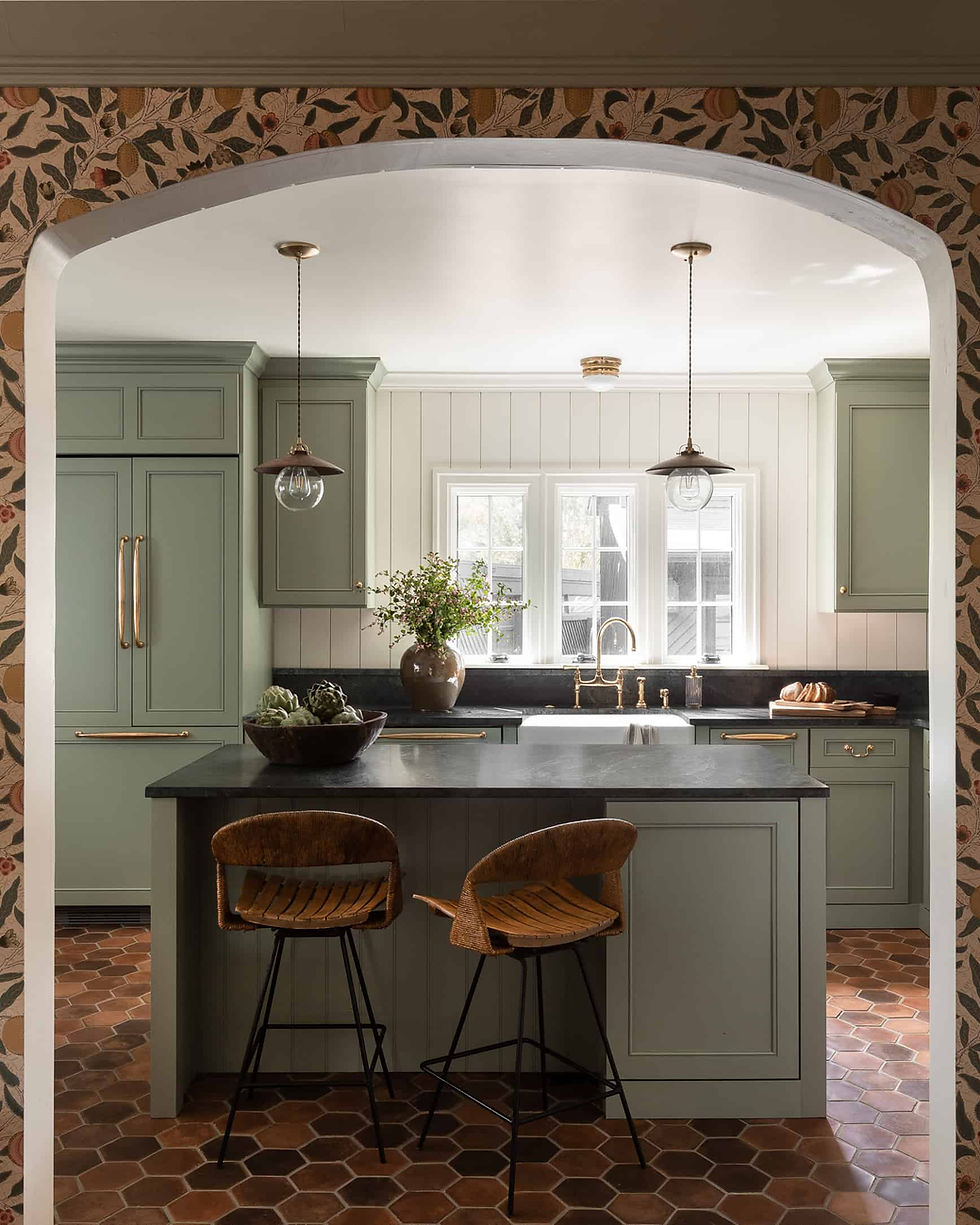
Credit: Heidi Caillier Design. This kitchen leans into a sophisticated, earthy palette. The deep, grounding terracotta of the beaded Shaker cabinetry provides a striking, soulful warmth, perfectly balanced by the cool, honed surface of the soapstone countertops. A crisp, vertically applied shiplap backsplash keeps the aesthetic clean and bright, while the tools add a layer of vintage mid-century charm. Finished with oversized, hand-finished pendants, the space feels thoughtfully curated, bridging the gap between rustic charm and modern luxury.
Question 03
Where does the traffic flow in your kitchen?
Map the working triangle: fridge, sink, and hob and how you move between them.
An island that cuts across this triangle adds steps to every task — it works against you, not for you.
Consider where guests naturally stand when you are cooking, particularly in open-plan layouts.
The best-placed island sits beside the triangle, never across it.
A well-placed island should disappear into the workflow, not interrupt it.

Credit: Amber Interior Design. By positioning the island parallel to the range, the design establishes a clear, efficient work triangle while ensuring the walkway remains open and unobstructed. The placement of the raffia-wrapped stools invites pause without encroaching on the primary corridor, allowing the space to transition smoothly from an active culinary zone to a serene gathering spot. It is a thoughtful arrangement that prioritizes both the architectural scale of the room and the fluid movement of life within it.
Question 04
What height do you actually need?
Standard worktop height is 90cm, suited to food preparation while standing.
Bar height is typically 105cm — comfortable for seating, less practical for serious prep work.
Consider your own height and that of the people who cook most often. The standard is not universal.
Two-tier islands resolve the tension between prep and seating but require additional floor space to work well.
Height is ergonomics. It is not, in the end, an aesthetic decision

Credit: Reeves + Richard Designers. For an island that acts as an extension of your workspace—as seen here with its crisp, marble-topped finish—a standard 36-inch height is your gold standard for ergonomic food preparation. However, if your vision leans toward a casual, bistro-style gathering, consider elevating the plane or selecting stools that maintain an effortless, unobstructed sightline. The key is in the relationship between your surfaces and your lighting; notice how these suspended green glass pendants are hung at a deliberate height to draw the eye downward, defining the island as a distinct zone without closing off the room’s volume. When planning your own, measure your comfort for prep first, then scale your lighting to complement that height, ensuring you preserve the room’s sense of architectural openness while maintaining functional intimacy.
Question 05
Does your lighting plan account for it?
Pendant lighting over an island is task lighting first, decoration second.
Hang pendant bases 70 to 80cm above the worktop surface for proper task illumination.
Use two pendants for islands under 1.5 metres, and three for anything longer.
Confirm the ceiling electrical position before committing to the island's final placement.
An unlit island is an afterthought. Plan the light before the layout, not after it.

Credit: Hibou Design & Co. The architecture of this space is defined by its serene, monochromatic layering, but the true brilliance lies in the sophisticated interplay of light. While the clean marble surfaces and structured stools provide the foundation, the lighting serves as the vital final layer—balancing task-oriented illumination with soft, ambient warmth. It prompts an essential question for your own project: Does your lighting plan account for it? In this kitchen, the lighting is not an afterthought but a primary architectural tool. The oversized, bell-shaped pendants over the island are positioned at a deliberate height, acting as a focal anchor that defines the culinary zone without fragmenting the open-plan feel.
Question 06
What material makes sense for how you cook?
Quartz — durable and low maintenance, with a consistent appearance over time.
Marble — beautiful, but marks and stains. A high-commitment choice.
Wood — warm and repairable, but requires regular oiling and should sit away from a sink.
Concrete — bespoke and heavy, requiring sealing and a specialist installation.
Choose the material for a Tuesday morning, not for the photograph.

Credit: Lux Decor. Your choice of surface is the most critical decision in your kitchen’s lifecycle. In this space, the dark, durable stone offers a moody, high-contrast aesthetic that stands up to the rigours of daily use, concealing the wear and tear of active culinary endeavours while providing a grounded, stable workspace. Conversely, if your kitchen is less a laboratory for complex recipes and more a gallery for hosting, you might gravitate toward the porous, living beauty of marble or the warmth of butcher block.
Question 07
Is your island connected to anything else in the room?
Match the perimeter cabinetry finish, or contrast it deliberately — but commit to the decision fully.
An island of contrasting colour is a design statement, not a compromise. Treat it as one.
Stone selection should relate to the backsplash or flooring, rather than competing with either.
Hardware should either match the rest of the room or intentionally complement it.
An island is part of the room's composition. It is not a standalone purchase.

Credit: Bricks & Birches. In this light-filled kitchen, the island acts as a rhythmic bridge, anchoring the culinary zone while inviting a seamless visual dialogue with the surrounding dining area. The pairing of the deep-toned base with the natural, woven cane stools creates a sophisticated texture that doesn’t just sit in the center of the room—it actively coordinates with the adjacent furniture, colour palette, and architectural lines.
Question 08
Have you thought about sockets and charging?
Pop-up sockets set into the worktop surface need to be planned before fabrication, not after.
Under-island sockets are essential for any appliances stored below the worktop.
USB ports and wireless charging pads are now a standard expectation in new kitchen builds.
Retrofitting power after installation is both expensive and disruptive to the finished room.
Power planning costs almost nothing at the design stage. It costs a great deal afterward.

Credit: Bricks + Birches. Notice the placement of the power outlet on the side of the island; it’s a subtle detail, yet it serves as a critical reminder: Have you thought about sockets and charging? An island is often the most valuable real estate in your home for both prep work and life admin, but it quickly becomes cluttered if your power needs aren't integrated into the design. In this space, the strategic placement of the socket allows for essential small appliances, laptop charging, or phone docking without marring the clean, seamless look of the countertop or the cabinet fronts.
Question 09
What's your honest budget — including installation?
Island unit: typically $2,000 to $8,000 or more, depending on size and specification.
Worktop fabrication and fitting: typically $800 to $3,000 or more.
Plumbing or electrical work, if required: typically $1,500 to $4,000 or more.
Factor in delivery, installation labour, and any necessary floor patching beneath the new footprint.
The island you see online never includes what surrounds it.

Credit: Astro Design Inc | Photography by Kevin Belanger. The waterfall island in this kitchen is a study in seamless, monolithic luxury—a statement piece that commands attention through the continuous veining of the stone. Its execution is flawless, but its elegance serves as a reminder of the hidden investment required for such high-calibre design. If you are aiming for this level of polish in your own home, it begs the question: What is your honest budget — including installation? When you see a slab-wrapped island of this magnitude, it is easy to focus on the cost of the material itself. However, a truly "architectural" finish—where the stone grain matches perfectly across the corners—demands premium craftsmanship that often doubles the total expenditure.
The Nine Questions, All Together
01 Is there genuine clearance on every working side? |
02 What does it need to do — prep, seating, storage, or a sink? |
03 Does it work with your kitchen's natural traffic flow? |
04 What height suits how you actually cook? |
05 Is the lighting plan built around it? |
06 What material suits daily use, not just photographs? |
07 How does it connect to the rest of the room? |
08 Are sockets and charging positions planned in advance? |
09 What is the honest total cost, including installation? |
None of these questions requires an architect. Most can be answered in an afternoon, with a tape measure and an honest look at how your kitchen is actually used — not how it might look styled for a single photograph. Answer all nine before the showroom visit, and the island stops being a risk. It becomes, simply, the room's best decision.
The Edit — Island Essentials


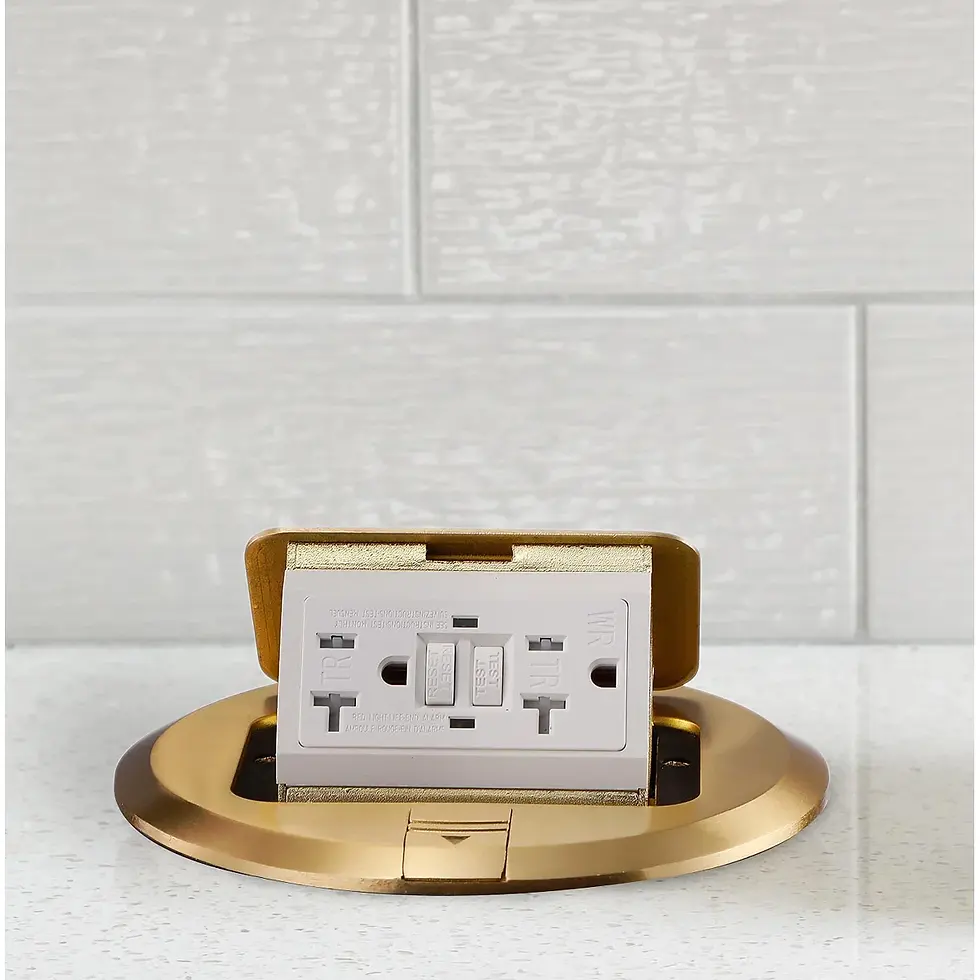
In-Worktop Pop-Up Socket
Flush-mount, retractable. Plan the position before fabrication.
Subscribe to the HomeFindss Edit. The most considered homes, finds, and living ideas—delivered to your inbox. Subscribe free → The Edit Newsletter


Comments